
1. Platform & Local Compliance
-
Platform: WordPress with Elementor or Webflow is ideal. They support heavy visual galleries and custom multi-step forms while allowing you to easily build localized landing pages.
-
NYC Building Codes & Regulations: NYC has strict rules, such as Local Law 97 (energy efficiency) and Landmark Preservation Commission (LPC) guidelines for historic districts. Dedicate a section to NYC-Compliant Windows to build instant authority with co-op boards, landlords, and architects.
-
Mobile Optimization: Contractors on active construction sites and busy homeowners commuting on the subway browse on mobile. Ensure fast loading times (under 2 seconds) and thumb-friendly navigation.
2. Core Features for the NYC Market
-
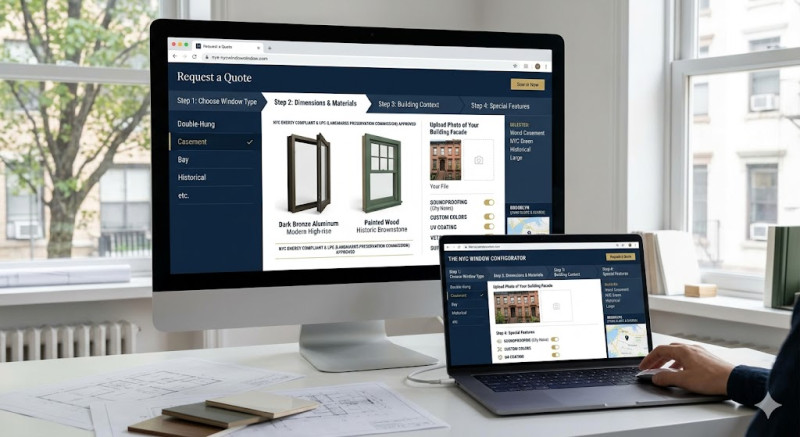
Multi-Step Quote Estimator: Instead of a traditional e-commerce cart, use a smart "Request a Quote" funnel. Let users select the window type (Double-hung, Casement, Architectural), material (Wood, Vinyl, Aluminum), input rough dimensions, and upload a photo of their building facade.
-
Localized Portfolio Galleries: New Yorkers want to see that you can work on their specific property type. Organize your gallery by:
-
Manhattan High-Rises: Focus on heavy-duty soundproof windows that block out street/subway noise.
-
Brooklyn Brownstones: Focus on historic, landmark-approved wood window restorations.
-
Queens & Staten Island: Focus on residential, energy-efficient vinyl replacements.
-
-
Brand & Architect Zones: Create downloadable PDF spec sheets for the premium brands you carry (e.g., Marvin, Andersen, Pella). Highlight technical data like U-factor and SHGC (Solar Heat Gain Coefficient) for contractors.
3. Hyper-Local NYC SEO & Trust
-
Neighborhood Landing Pages: Don't just target "NYC." Build optimized pages for high-intent keywords like "Soundproof windows Upper East Side", "Brownstone window replacement Brooklyn", or "Commercial storefront glass Queens".
-
Co-op & Condo Board Navigation: Add a dedicated page explaining how your company handles the heavy paperwork, architectural reviews, and insurance certificates (COI) required by NYC building boards. This is a massive selling point.
-
Local Contact and Map: Embed a Google Map leading to your physical showroom. Display your local address and phone number (212, 718, or 917 area code) prominently in the header.
Budget & Launch Checklist:
-
Domain & Fast Hosting: $200–$500/year (Use a premium CDN for fast local image loading).
-
Custom Lead Engine: $300–$600 (Advanced multi-step forms and file upload systems).
-
Development & Design: $3,500–$7,500+ depending on the product catalog depth and local SEO setup.
Golden Rule: Keep the website focused on solving NYC-specific pain points: noise reduction, landmark approvals, and energy efficiency compliance.