
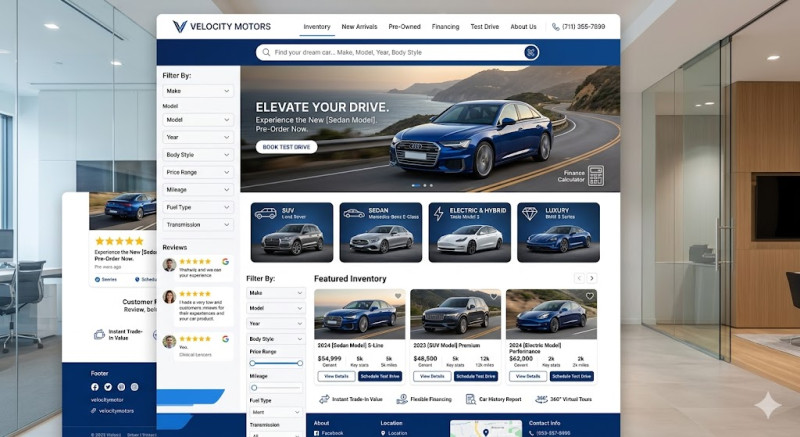
1. Platform & Technical Essentials
-
Platform: WordPress with specialized dealership plugins (like Car Dealer) is highly flexible. For custom, high-traffic inventory management, dedicated automotive CMS platforms or custom frameworks are preferred.
-
Mobile-First Design: Over 70% of users browse cars on their phones. Fast loading speeds, thumb-friendly buttons, and responsive image galleries are critical.
2. Core Features (What Your Site Needs)
-
Advanced Inventory Search (VDP - Vehicle Display Pages): The heart of your site. Users must be able to filter vehicles by: Make, Model, Year, Price, Mileage, Body Style (SUV, Sedan, etc.), Fuel Type (Petrol, Diesel, Hybrid, EV), and Transmission.
-
High-Impact Visuals: Every car listing needs a high-resolution 360° virtual tour or a comprehensive photo gallery (at least 15–20 photos showing the exterior, interior, dashboard, tire tread, and any imperfections for transparency).
-
Car History Integration: Embed trusted vehicle history reports (e.g., CARFAX, AutoCheck) directly onto the vehicle details page to build immediate trust.
3. Lead Generation & Conversion Tools
-
Financial Calculators: Include an interactive tool on every car page allowing users to estimate monthly payments based on loan term, down payment, and interest rates.
-
"Trade-In" Valuation: Offer a simple form where users can submit their current car’s details to get an estimated trade-in value.
-
Test Drive Booking: A prominent, frictionless call-to-action (CTA) button: "Book a Test Drive" with a simple calendar integration.
4. SEO & Local Marketing
-
Local SEO: Optimize for location-specific keywords (e.g., "Used SUVs for sale in [City Name]", "Certified Pre-Owned BMW [City Name]"). Ensure your Google Business Profile is linked.
-
Video Walkthroughs: Embed short YouTube video walkarounds for featured vehicles. Video greatly increases time spent on your site, boosting your Google ranking.
-
Customer Reviews: Highlight Google or Facebook reviews on your homepage. Buying a car is a major financial decision, and social proof is essential.
Summary Cost & Launch Checklist:
-
Domain & Hosting: $100–$300/year (Premium hosting is required for heavy image databases).
-
Inventory Management System (Inventory Feed): Connecting your physical lot inventory to your website automatically via daily XML/API feeds.
-
Development: $3,000–$8,000+ depending on the complexity of the inventory system and financing integrations.
Golden Rule: Keep your stock data updated in real-time. Nothing frustrates a customer more than falling in love with a car online, only to find out it was sold three days ago.