
1. Platform Choice (E-commerce Engine)
-
WooCommerce (WordPress): The best choice for a start if you have a limited budget. Low maintenance costs, huge flexibility, and great options for running an angling blog (which drives free traffic from Google).
-
Shopify / Shoper: Subscription-based options (SaaS). You pay monthly but don't have to worry about servers, updates, or security. Good if you want to launch "right now".
2. Information Architecture (How to Set Up the Menu?)
Anglers look for products based on the fishing method. Your main menu must be intuitive:
-
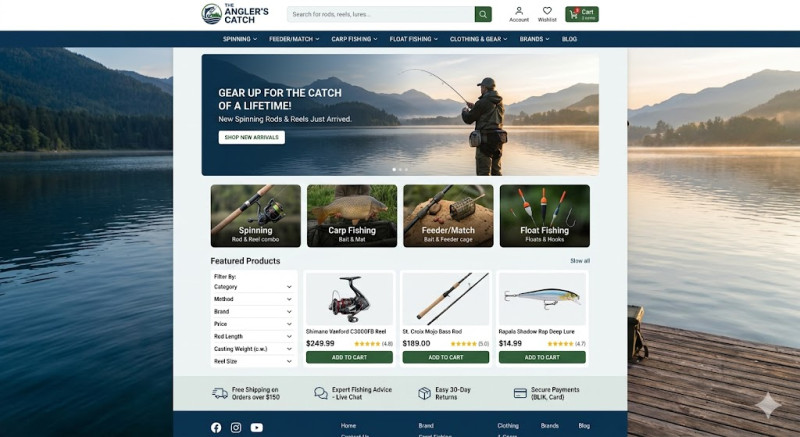
Main Categories: Spinning, Feeder/Match, Carp Fishing, Float Fishing, Ice/Sea Fishing.
-
Subcategories (within each method): Rods, Reels, Lines/Braids, Lures/Baits, Terminal Tackle (hooks, swivels).
-
Specialized Zones: Clothing (waders, jackets), Bivvy/Camping (tents, chairs), Electronics (fishfinders).
3. Must-Have Features
-
Advanced Filters: Customers must be able to filter reels by size (e.g., 3000, 4000), rods by casting weight (c.w.), or lures by weight and color.
-
Product Variants: Instead of creating 10 separate pages for the same spinning soft bait in different colors, create one product with a drop-down list to select color and size.
-
Quick Payments and Shipping: Local instant payments (like BLIK in Poland) and automated parcel lockers are an absolute must. Anglers often order packages directly on their way to a fishing spot or to a pickup point near the water.
4. Sourcing Products (Inventory)
-
Traditional Wholesale: You buy stock for your own warehouse, pack it, and ship it yourself. Higher margins, full control over quality and shipping time.
-
Dropshipping: You sell stock you don't physically own. Upon purchase, the order goes to the wholesaler, who ships it to the customer. Lower margins, but no financial risk at the start. In the fishing industry, the key is finding a wholesaler with real-time stock updates (via XML/API).
5. How to Get Your First Customers?
-
Google Shopping: Product campaigns (showing the photo and price directly in the search engine) yield the best return on investment (ROI) in e-commerce.
-
Starter Kits: Create ready-made bundles (e.g., "Beginner Pike Kit" or "Weekend Groundbait Pack"). People love convenience, and you increase your average order value (AOV).
-
Loyalty Program: Points for every purchase that can be exchanged for discounts or free packs of hooks. Anglers return to stores that take care of their regular customers.