
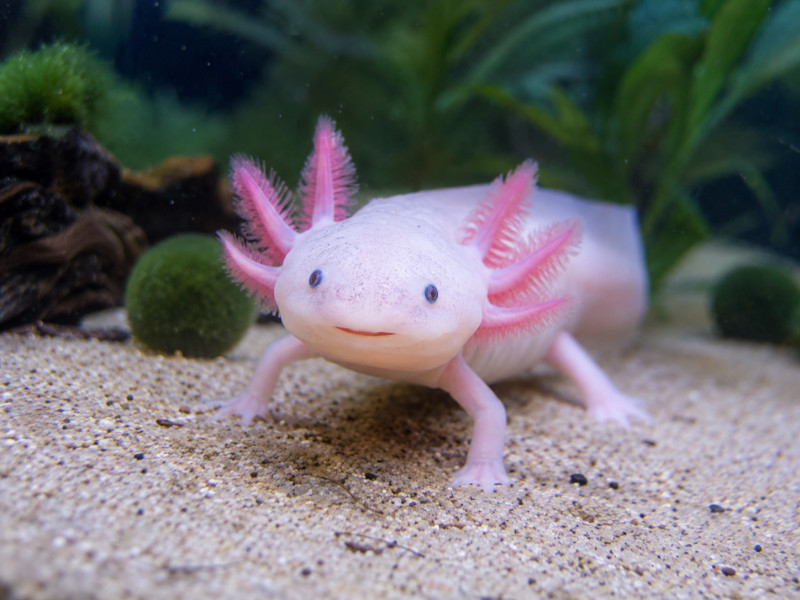
Axolotls are among the most unusual and fascinating pets in the aquarium world. With their wide “smile,” feathery external gills, tiny legs, and dragon-like appearance, these aquatic amphibians look almost unreal. Often called “smiling water dragons,” axolotls have become popular with aquarium lovers, exotic pet keepers, and internet fans around the world.
But behind their cute appearance, axolotls are delicate animals with specific care needs. They are not typical fish, and they should not be treated like ordinary aquarium pets. Anyone interested in keeping an axolotl should understand its habitat, diet, water requirements, and long-term responsibilities.
What Is an Axolotl?
The axolotl is an aquatic salamander originally from Mexico. Unlike most salamanders, axolotls usually remain in their larval form for their entire lives. This means they keep their external gills and live underwater instead of transforming into land animals.
Their unique biology makes them especially interesting. Axolotls are famous for their ability to regenerate body parts, including limbs, tail tissue, and even parts of some organs. This has made them important in scientific research, but it has also made them a symbol of nature’s incredible abilities.
Why Are Axolotls So Popular?
Axolotls have a look that is hard to forget. Their fluffy gills, gentle expression, and slow movements make them charming and almost cartoon-like. They come in several color varieties, including wild type, leucistic, albino, golden albino, melanoid, and copper.
Their popularity has also grown because of social media, video games, and online communities. Many people first discover axolotls through cute photos or videos, then become interested in keeping them as pets.
However, popularity can be dangerous when people buy them without learning how to care for them properly. Axolotls are beautiful, but they are also sensitive animals that need stable conditions.
Are Axolotls Good Pets?
Axolotls can be rewarding pets for patient and responsible owners. They are quiet, unusual, and interesting to observe. They do not need walks, toys, or constant interaction, which makes them different from many common pets.
However, they are not ideal for everyone. Axolotls are not pets for handling. Their skin is sensitive, and touching them can cause stress or injury. They are best enjoyed as display animals in a carefully maintained aquarium.
They are also long-term pets. A healthy axolotl can live for many years, so owners should be prepared for a serious commitment.
Aquarium Setup
A proper tank is one of the most important parts of axolotl care. Axolotls need clean, cool, well-filtered water. A single adult axolotl should have enough space to move comfortably, and larger tanks are always better.
The aquarium should have a secure lid, because axolotls can sometimes jump. The tank should also include hiding places, such as caves, aquarium-safe decorations, or smooth shelters. Axolotls like to rest in shaded areas and may become stressed in bright light.
Strong water flow should be avoided. Axolotls prefer calm water, so filters should be adjusted to create gentle circulation.
Water Temperature and Quality
Axolotls need cool water. Warm water can stress them and increase the risk of illness. Keeping the aquarium at a stable, suitable temperature is essential.
Water quality is equally important. The tank must be fully cycled before adding an axolotl. Owners should monitor ammonia, nitrite, nitrate, and pH levels regularly. Poor water quality is one of the most common causes of health problems in axolotls.
Regular water changes are necessary, but they should be done carefully to avoid sudden changes in temperature or water chemistry.
Substrate: What Should Be on the Bottom?
Choosing the right substrate is very important. Small gravel is dangerous because axolotls may swallow it while feeding. This can cause serious internal blockage.
Many owners use bare-bottom tanks because they are easy to clean. Another safe option is fine sand, especially for adult axolotls. Any stones or decorations should be larger than the axolotl’s head so they cannot be swallowed.
What Do Axolotls Eat?
Axolotls are carnivores. Their diet usually includes earthworms, bloodworms, brine shrimp, blackworms, and high-quality axolotl or carnivore pellets. Earthworms are often considered one of the best staple foods for adult axolotls.
Young axolotls usually need to eat more often than adults. Adult axolotls can be fed less frequently, depending on their size, age, and health.
It is important not to overfeed them. Uneaten food should be removed from the tank, because it can quickly pollute the water.
Can Axolotls Live with Fish?
In most cases, axolotls should not be kept with fish. Fish may nip at an axolotl’s delicate gills, causing injury and stress. Axolotls may also try to eat small fish, which can lead to choking or digestive problems.
Keeping axolotls with other axolotls can also be risky if they are different sizes. Larger axolotls may bite smaller ones, especially during feeding. If multiple axolotls are kept together, they should be similar in size and have enough space.
Common Health Problems
Many axolotl health problems are connected to poor water conditions, high temperature, stress, or unsuitable tank setup. Warning signs may include curled gills, loss of appetite, floating problems, skin changes, injuries, or unusual behavior.
Because axolotls are sensitive, prevention is better than treatment. Clean water, proper temperature, safe substrate, and a balanced diet are the foundation of good health.
Conservation and Responsibility
Although axolotls are common in captivity, wild axolotls are critically endangered in their natural habitat. This makes responsible ownership even more important.
Potential owners should buy axolotls only from ethical breeders and avoid supporting illegal or irresponsible trade. Learning about their natural history can also help people appreciate why these animals deserve protection.